
Happy mid-week!
Although this series is called Coffee with a Dancer, I’m starting to notice a pattern: my guests don’t necessarily share my love for coffee. This week, my guest is a black tea person. Meet Sasha Portyannikova.
Sasha is a dancer, choreographer, and researcher whose work lives in the friction between what dance remembers and what it's trying to forget.
For nearly a decade, she and Daria Plokhova have been digging through early Soviet archives, uncovering avant-garde movement experiments buried under propaganda. Not the heroic ballets history celebrates, but laboratories where artists treated the dancing body as collective thought in motion. In "Minor Urgent Dance in Mordor," her essay for Issue 04 of A Dance Mag, she turns to today's underground Russian dance scene: artists working under impossible conditions, military recruiters at train stations, the constant risk of speaking against the war.
But something else troubles her more than censorship or exile. She notices experimental dance scenes everywhere drifting away from the body itself. "Humanitarian ideas have become conceptual frameworks that replace embodied practice and craft with text," she tells me. "I feel like we're drifting away from dance toward text, and it bothers me."
Her response to this anguish is play. Her solo, parsley for garnish, reimagines Petrushka as a card game, using rules and chance to sidestep assumptions about migration. "Games distract us from self-censorship," she explains. "They let us simulate situations, leaving space between the process and the reflection that may come later. Or not." This approach gives us the permission to move without knowing where it leads, something I find refreshing.
Through Touching/Moving Margins, her project documenting overlooked dance histories, abstraction became physical. "The colonial heritage became palpable. The violence of universalism stopped feeling abstract. I grew up believing progress was unquestionably good. I still see its benefits, but I'm beginning to understand the cost.”
Currently in Sasha’s World
When she's not on a train between cities, here's what’s keeping her company:
📖 On her nightstand: Shady Lewis, On the Greenwich Line, “an inspiring mix of political correctness satire, daily Kafkaesque, and almost untraceable acts of moral choice.” A sharp, darkly funny novel about bureaucracy, migration, and moral choice. Set in an East London housing office, it follows a local government employee organizing the funeral of a young Syrian refugee, only to realize how close his own life runs to those who’ve fallen through the cracks. Lewis uses humor not to soften reality, but to make it bearable, a way to “defuse the drama in our lives, so we don’t mistake pity for solidarity.”
Also on her nightstand: Bertha von Suttner, Die Waffen nieder! and Oksana Vasyakina, Rose, two very different books, both grappling with war, loss, and the hidden costs of progress. One a 19th-century anti-war classic, the other part of a contemporary autobiographical trilogy now banned in Russia.
📺 On her screen: Roman Mikhailov, “a Russian mathematician and Professor of the Russian Academy of Sciences who is also a screenwriter, theater and film director, draws canvases of madness, devotion, chance, and love within a post-Soviet set-up. Leaving with the confusion of the nostalgia of something that is not just ugly, but also scary, and yet cozy and sentimental.”
Films that leave you unsettled in a productive way. Mikhailov’s work moves through post-Soviet worlds shaped by devotion, chance, madness, and fragile forms of love. You don’t leave with answers, but with the strange nostalgia of something both frightening and tender, familiar and distorted.
🎧 Listening to: Vtoroi Ka, post-punk from Bishkek with rhythm that carries you before you even catch the words. There’s a lightness here that resists the genre’s usual gloom, music that moves without asking permission, and poetry that sneaks up on you after your body is already involved.
🎟️ Activity: Experimental music concerts, she’s drawn to spaces where musicians take real risks, working with emerging compositions that demand skill, craft, and attention. For Sasha, these concerts are reminders that experimentation doesn’t mean abandoning form, it means committing to it fully.
👤 Accounts she follows
@solar.w Aleksey Efremov, a Kazakhstan-based XR artist working with augmented reality, AI art, and interactive installations. His work uses technology not as spectacle, but as a tool for disorientation, play, and re-training perception.
@uglyy_fruuit Kasper Latkowski, a UK-based audiovisual artist pushing AI systems toward instability and contradiction. His images dwell in the moment where machines stop imitating reality and begin to glitch, revealing their own limits.
More from Sasha?
Read her full profile:
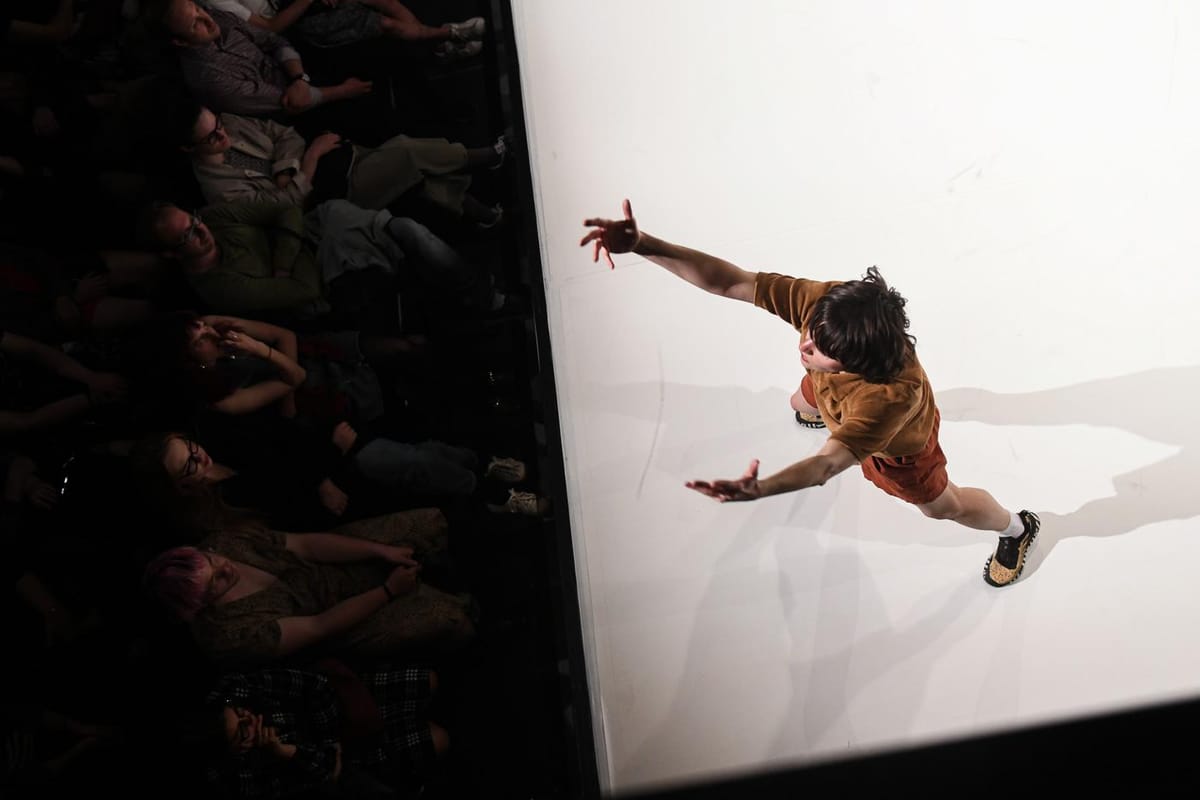
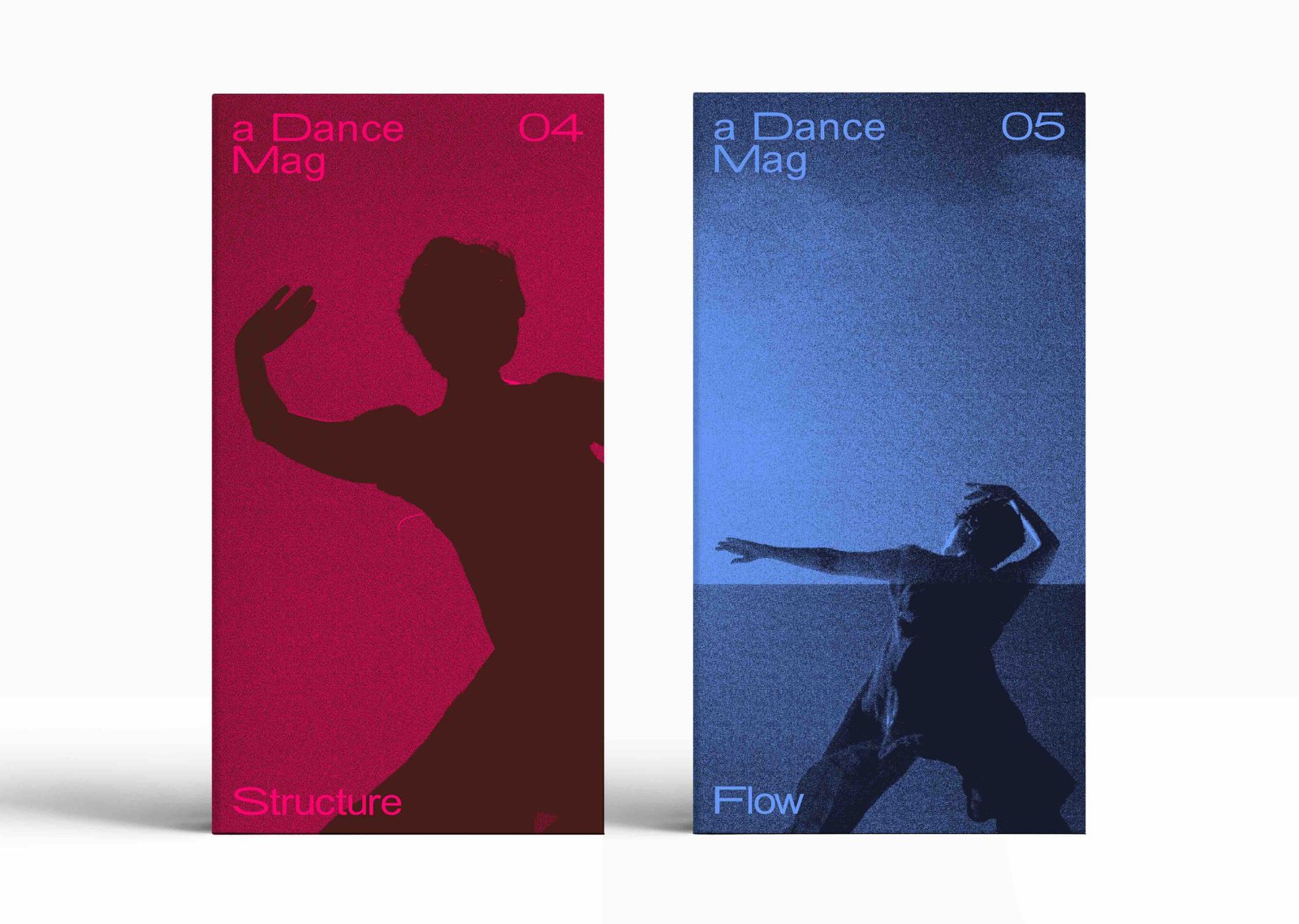
Find her essay in A Dance Mag 05: Structure
Thank you for joining us for this tea. Until next week! 🩷
Warmly,
Jana Al Ob.
Founding Editor
Do you have comments or suggestions? I’d love to hear your thoughts, please hit the reply button!
Enjoyed this edition? Feel free to share it with a friend.
Looking for dance books? Sift though Books on the Move’s collection.
Do you enjoy thoughtfully curated long reads about a variety of topics in your inbox? Check The Mortar.